
- NEW

Sort
Found 8 results
Sort:


.png "Alpina")




.jpg "BIOLABO S.A.S.")


.png "Consarctic")
.svg "Convergent Technologies")
.png "Cube DX")


.png "Dirui Industrial")

.png "Don Whitley Scientific")
.png "Edan")

.png "Genolution")
.png "Helmer Scientific")

.png "Ingenetix")




.svg "QuantaMatrix")



In medicine, research into microscopic extracellular structures is particularly important, as these structures open up new avenues for understanding the complex processes of intercellular communication. One such structure is the exosome, a nanoscale vesicle secreted by every cell that transports important molecules—proteins, lipids, and nucleic acids. As a result, exosomes serve as a valuable source of information about the body’s condition and are actively used in modern clinical research.
Modern research into such structures requires high precision, which is why specialized equipment for clinical exosome research plays a crucial role, ensuring reliable results and expanding the possibilities for diagnosis and the development of new approaches in medicine. You can order high-quality equipment for exosome research at the Empirica online store, which offers a professional catalog of instruments for scientific and clinical applications.
An exosome is an extracellular nanoscale structure that forms inside a cell and is released into the external environment as part of a complex biological process. Each exosome contains a unique set of molecules, including RNA, proteins, and other substances that reflect the state of the parent cell and tissue. Thanks to these properties, exosomes are actively used in clinical practice, as they allow for the collection of information about diseases without resorting to invasive methods.
Clinical exosome testing is conducted in situations where it is necessary to obtain the most accurate data possible about a patient’s condition at the molecular level. This is particularly relevant for the early diagnosis of oncological processes, assessment of immune status, and monitoring of treatment efficacy. In clinical practice, exome testing is used to identify hidden changes that have not yet manifested as symptoms. It is also used in research projects aimed at studying cell interactions and developing new drugs. Thus, exome testing has become an important tool in both basic science and applied medicine.
The exosome research process involves several stages, each of which requires a specialized approach and modern equipment. First, particles are isolated from a biological sample, such as blood or plasma. Next, they are purified and prepared for analysis. The next stage involves quantitative and qualitative analysis to determine the size, concentration, and properties of each exosome. Analysis of the contents is also a crucial aspect, as it reflects the state of the cells and may indicate the presence of diseases. Modern technologies enable exosome research with high precision, providing a detailed analysis of each particle and its characteristics.
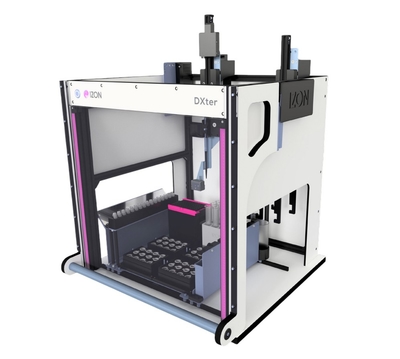
The qEV DXter high-throughput system for isolating extracellular vesicles. This is an automated system designed for highly efficient isolation of extracellular vesicles, which significantly streamlines laboratory processes. The device handles the entire workflow: from column preparation and sample processing to buffer dispensing and collection of purified fractions, thereby reducing manual labor and minimizing the likelihood of errors. The system offers flexible settings, allowing you to adjust liquid volumes, pipetting speeds, and timing parameters, as well as save data in CSV format for convenient monitoring and analysis. High precision is achieved through the use of a high-quality glass syringe, ensuring stable and reproducible results. Its compact design makes the qEV DXter easy to integrate even into small laboratories, while the device maintains high throughput and allows for the simultaneous processing of a large number of samples, increasing workflow efficiency and standardization.
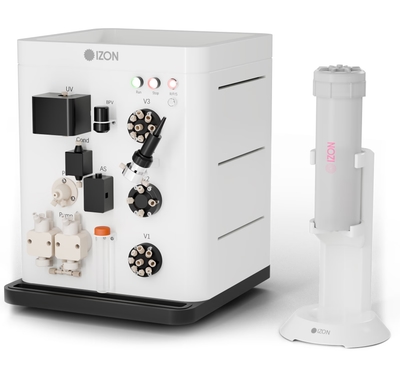
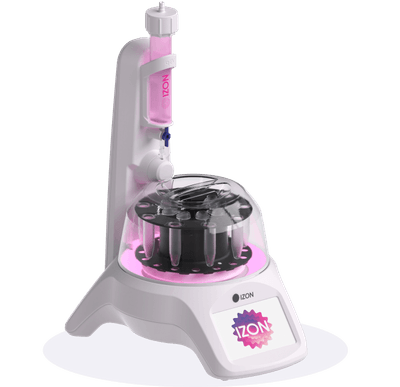
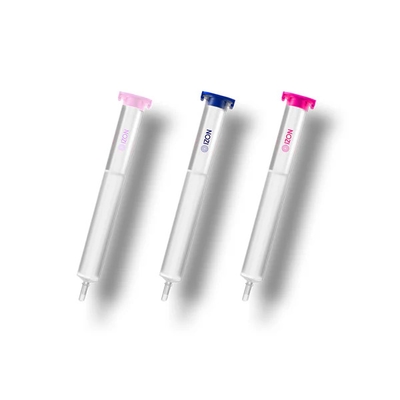
Automatic Fraction Collector. The automatic fraction collector is a state-of-the-art device for optimizing the isolation of exosomes and other extracellular vesicles. The device operates on the principle of size-exclusion chromatography (SEC) and ensures precise, reproducible, and customizable fraction distribution. Thanks to its broad compatibility with most qEV series columns, the system allows for the efficient organization of laboratory workflows and enhances the standardization of results. The ability to vary the volumes of collected fractions makes the instrument a convenient tool for various research tasks.
Modern exosome research opens new horizons in diagnostics, drug development, and personalized therapy, providing insights into the body’s condition at the molecular level. To achieve accurate and reproducible results, it is necessary to use professional exosome research equipment that meets high quality standards. High-quality exosome analysis equipment can be purchased from the Empirica online store at an affordable price, with the option to buy the necessary instruments with delivery to Kyiv and other regions of Ukraine.